🔦 What are Solar Animal Repellers & How They Work
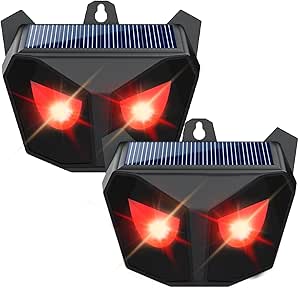
These are devices that use solar panels + batteries + sensors + deterrents (usually ultrasonic sound, flashing lights, maybe vibration) to scare away animals, especially at night. Key components include:
| Component | Function |
|---|---|
| Solar panel | Charges battery during daytime so device can run at night without external power. |
| Battery | Stores energy; size matters for how long it runs in darkness / low light. |
| Sensor(s) | E.g. PIR motion sensor (detects movement), light sensor (to turn on automatically at dusk), sometimes vibration sensors (for underground rodents). |
| Deterrent method | Ultrasonic frequencies (sound), flashing/strobe lights, alarms, sometimes vibration. These are meant to startle or annoy animals—but ideally harmless. |
| Weatherproof housing | Must resist rain, dew, dust etc. If meant for outdoors at night, good IP rating helps. |
✅ Things to check / consider
IP rating (waterproof or water-resistant) so it survives rain/dew overnight.
Battery capacity + how many hours it can run when there’s no sun.
Sensor range (how far it detects motion) + detection angle. For night-time, animals may approach more stealthily, so good range helps.
Type of deterrent: Some animals may not be bothered by ultrasonic sound, or may get used to it. Combining ultrasonic + strobe lights or flashing LEDs tends to be more effective.
Adjustability: Frequency settings, sensitivity, maybe switch off during certain hours (if needed).
Durability and mounting: Stakes for ground, ability to hang, etc.
Humane / safety: Make sure it won’t hurt animals or disturb pets (and humans) with constant loud noise or flashing light.